Wednesday, August 7, 2013

A "belly" of elections


At a loss of the appropriate term to describe the numerous elections and transitional governments that have characterized the African scene just now, I decided to borrow from the concept of collective nouns that has standard terms for particular groups of things, animals and so on, like a knot of toads, a parliament of owls, a congregation of alligators etc.  I call it a “belly” of elections though to emphasize the number and frequency at which elections have occurred, considering that the “belly” stows a lot of things literarily and figuratively.

I start off with Mali where there was a heated debate on the political scene as to whether or not the election should hold, owing to the strong possibility that it may not give the desired effect. Within a very short time, Mali went through a lot of trauma, which rendered a state that was once known for its serenity, stable but somewhat imperfect democracy as well as its position as some sort of cultural capital being home to notable historical sites and artifacts that are under UNESCO, into something of a “ghost town”.

The economy, society and political stage came under threat, first upturned by a Military coup, then harassed by insurgents, and then further demoralized by extremists who threatened to split the country into two, which resulted in a transitional government that didn’t quite gain its place as an institution of authority over the populace. Everything happened very fast, but the people were resilient in their hope, having tried all these forms of leadership within the shortest possible space of time, they still believed that the election was their last chance at the unity and serenity they once enjoyed.  Experts on Mali kept asking if election was the automatic solution to all the woes that befell this small country, more depressing on the subject of change was also the fact that majority of the 27 candidates had served in almost all the regimes - previous and present. Nevertheless this did not deter the Malians, they flooded the polling stations and completed a peaceful round of voting and now the stage is set for the 2nd round with Ibrahim Boubacar Keita and Soumaila Cisse going head to head! But then again, the question still hovers, what comes next?

THE LANDSLIDE VICTORY OF ZANU-PF
I now head to Zimbabwe which happens to be more theatrical, where the legislature amended the country’s constitution, and the citizens accepted it in a referendum which got the support of the two sides sharing the country’s power. Another debate ensued about when to set the election date; the opposition MDC wanted reforms before a date was set but President Robert Mugabe in his characteristic manner insisted on the 31st of July, he even threatened to withdraw Zimbabwe’s membership from the regional bloc SADC not minding that it is the lifeline of its ailing economy. Mr. Mugabe and his ZANU PF party pride themselves with having the support of the rural populace who fit the description of the ordinary man that every politician tries to empathize with. However, two issues take center stage, it was alleged that the voter roll disenfranchised a lot of voters, and in the same breath, it was confirmed that all rural eligible voters were registered as such those who had problems of disenfranchisement were mainly middle class urban voters who support Tsvangirai’s MDC. The African Union observers led by Olusegun Obasanjo former president of Nigeria did not deny that there were irregularities in the vote, but they submitted that they were not enough to render it dishonest and unfair. So I wonder how much of a threat is the urban middle class to Mugabe?

OF EGYPT AND TUNISIA
The situation in Egypt and Tunisia is frightful, in spite of the loss of lives in especially Egypt, there isn’t a sign of respite In an article he wrote in the TIME magazine on the 12th of July 2013 titled “Egypt must reach out to the Islamists it is now jailing” Fareed Zakaria who hosts the programme GPS on CNN international made the following remarks

Look at the world from the perspective of someone who embraces Islamic politics. In 1991, Islamists won in national elections in Algeria that were free and fair, with dozens of parties contesting and an open and lively campaign. The Algerian military annulled the results and unleashed a campaign of arrests and violence against the party that won. In 1995, Islamists won the elections in Turkey, only to have the Turkish military force the party out of power two years later in what is often referred to as a “soft coup.” In 2006, Hamas won Palestinian ­elections—triggering a boycott of the newly elected government by the U.S. and most of its allies. In Egypt, the Brotherhood won at the polls three times. It won in the parliamentary elections, in the presidential election and then in its referendum for the new constitution, which passed with 64% of the vote. Last year a judge dissolved the lower house of parliament, and now the constitution has been suspended and the President is in jail.
As we wait to see the outcome of the standoff in Egypt right now, one can't help but contemplate the future of democracy in the Arab world, however, what role can we give to lessons learnt in order to have a way forward?
Wishing IBK in Mali the best of luck


Friday, July 26, 2013

Cameroon "Afrique en miniature"

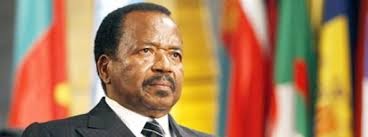
In Africa, Cameroon stands out for a number of unique reasons; it is described as one of the most stable democracies in the region. For more than 30 years Paul Biya has ruled the Rebulique of Cameroon, a complex nation with numerous ethnic groups. The geography of the country itself is a marvel, occupying an area of close to half a million square meters ranging from rainforests in the north savanna in the south as well as five distinct climatic zones! This for me is such a wonder! Can’t even fathom how such a country exists. Hence I interviewed a colleague of mine who comes from this “marvel”. His name is Mouhamadou Awal Balarabe and he’s an award winning journalist working with the Deutsche welle in Bonn. My first question was how does the country manage to have this reputation of stability which happens to be a rarity in the region given the present circumstances?

En Afrique, le Cameroun se distingue par un certain nombre de particularités. Il est décrit comme l'une des démocratie les plus stables de la région d'Afrique centrale. Depuis plus de 30 ans, Paul Biya préside au destiné du Cameroun, un pays complexe de part ses nombreux groupes ethniques et sa géographie qui est une merveille: Outre sa superficie de près d'un demi-million de mètres carrés, le cameroun regorge des forêts tropicales au Sud, la savane au Nord ainsi que quatre zones climatiques distinctes. Tellement imaginable que je considere comme une telle merveille! . C'est pourquoi j'ai interviewé un de mes collègues qui vient de cette "Afrique en miniature". Son nom est Mouhamadou Awal Balarabe, qui a remporté un prix de journalisme de lÙE, est aussi redacteur a la Deutsche Welle. Ma première question était de savoir comment le Cameroun a pu se batir une réputation de stabilité dans une zone Afrique centrale qui est réputé assez instable?

President Paul Biya. Photo source: The Richest

There is an informal power sharing system among the different regions of the country that exists in Cameroon. The country has different ethnic groups that communicate. There is an old system that has been in use since independence, which requires that when the president is chosen from the French speaking side of the country, the prime minister must come from the English speaking side. If the president comes from the south, like it is at the moment, and the prime Minister comes from the north west region, then the speaker of the lower house of Parliament for example will have to come from the northern region of the country while the Senate leader comes from the west, as it is also at present. At present the judge of the Supreme Court comes from the coastal region that is in the middle of Cameroon. This helps a lot in stabilizing issues in the country, in a manner that reduces dissatisfaction and complaints, because all regions are carried along no matter who the president is. As such nobody focuses on who the president is, rather more emphasis is placed on the state policy concerning the protection of the rights of individuals irrespective of gender and ethnicity so that success is achieved


Il ya un système de partage du pouvoir informel entre les différentes régions du pays qui existe au Cameroun. Certes il y a un axe délimité entre la Nord et le Sud pour ce qui est de la présidence de la République. Mais le pouvoir est un veritable gateau national qui se partage entre les quatre parties du pays. ca veut dire que lorsque le président est francophone, le premier ministre viendra du côté anglophone du pays. Actuellement le président vient du sud , alors que le premier ministre vient de la région Nord-Ouest, tandis que le président de l'Assemblee Nationale vient de l'Extreme Nord du pays, et celui du Sénat vient de l'ouest. Par contre le président de la Cour suprême vient de la région littorale qui se trouve au milieu du Cameroun. Ce partage aide beaucoup à la stabilisation de problèmes dans le pays, car aucun groupe ethnique n'est véritablement lésé. Personne ne se soucie de qui est le pr´sedent de la République. Mais l'accent est plutôt mis sur comment les interets de chaque partie du cameroun est preservé. C est ca la clé de la stabilité relative du Cameroun.


Photo Source: Africa News

Cameroon has an interesting combination of environmental and mineral resources, for people in neighboring countries or even those from outside the region, how would you describe these to them in a way that they can both identify with as well as get attracted enough to visit?
Le Cameroun a une combinaison intéressante des ressources environnementales , minérales et meme touristiques. comment décririez-vous la particularité du Cameroun a ceux qui voudraient le visiter?


Cameroon has a God given gift, which is why for us as citizens; we have a slogan that describes it as “a blend of the African Continent” because every kind of attraction that you can find anywhere on the African continent, exists in Cameroon. If you take the deserts for example that spans the length of the Saharan region, most of the Arab countries as well as Mali and Niger, you can find it in Cameroon. The region that shares a border with Chad for instance is one of such examples. In the month of August during the rainy season, Doula which is the business hub of the country is almost like Lagos in Nigeria and then for the temperate whether, not too cold not too hot, you can find that in Yaoundé the capital city. As such whether it is weather, lifestyle, mineral resources, forest reserve, game reserve or any other thing that relates to tourism Cameroon is the place to find it!

Le Cameroun est un pays beni de Dieu, car il regorge de toutes les autres ressources dont disposent les autres pays du continent africain. C est pourquoi il est considéré comme une 2Afrique en miniature." Toutes les attractions touristques du continent s'y trouvent. Ce désert qui s'étend dans la région sahélienne se trouve dans la partie Nord du Cameroun, qui partage une frontière avec le Tchad. Douala qui est le centre des affaires du pays partage le climat tempéré de Lagos qui est la capitale économique du Nigeria. Par contre le climat équatoriale de la ville de Yaoundé la capitale est commun au pays de la zone Afrique centrale et meme de certains pays du Sud du cintinent. En plus la Cameroun regorge de réserve forestière, de parcs animaliers ainsi que d'autres aspects du tourisme.


Lake Oku! Photo Source: Google

So as a Cameroonian, what are you most proud of about your country?

Donc, en tant que Camerounais, pouvez vous me dire ce qui fait la fierte de votre pays?


What I boast about is the peaceful coexistence we enjoy, because you will find that it is a country that has 256 ethnic groups and it has two main distinct regions known as the “Anglophone” and “Francophone” who have different faiths, apart from Islam, there is Christianity, Traditional Religion as well as atheism and all these do not generate any cause for misunderstanding or violence among citizens in the country and wherever you meet them, even if it is back home, you will think they come from the same family irrespective of their differences. I am really proud of this because it is not so in other countries in Africa where something very little will trigger a very huge problem that will take a long time before it is solved.

Ce que je vente le plus c'est la paix permanente qui y existe au Cameroun malgré sa multitude d'ethnies. Nous jouisson d'une coexistence pacifique entre les 256 groupes ethniques et aussi entre les «anglophones» et «francophones»: Aussi il y a une comprehension mutuelle entre la adaptes de différentes religions, c est a dire l'Islam , le christianisme, et meme les religions traditionnelles ainsi que les athés. l'alchimie savament dosé au cours des générations a généré uin havre de paix. Je suis vraiment fier de cela parce que ce n'est pas le cas dans les autres pays d'Afrique où quelque chose de très peu déclenchera un très grand problème qui va prendre un certain temps avant qu'il soit résolu.


Tuesday, July 2, 2013

I Second Local Government Autonomy in Naija............... Period!

My very first attempt at driving a four wheel gave me a memory I can never erase. It was during one of the holidays from secondary school, a friend of mine came with a car and we decided to take it for a “spin”. What was supposed to be a fun outing turned out to be the most rigorous exercise I have ever been through. I started the car enthusiastically and put the hand break down, I was then told to step on the clutch and shift the gear to level  one, then let  it go slowly while I pedal on the gas to put “her” on the road where she belongs.
First of all, these motions felt like there were a thousand of them that I just couldn’t follow, and somehow the clutch and gas pedal synchronization felt almost humanly impossible.

After what felt like an eternity of several failed attempts that almost killed the battery I took off!!! But shortly afterwards, the engine started revving harder and I was told to shift gears, then make sure I peak at the rear view mirror and side mirrors as often as I can just in case there are other vehicles that I should be aware of, as well as concentrate on keeping the steering straight so I don’t go off the road, - which I was already doing of course – exasperatedly I thought “how can one concentrate on all these motions and still drive?”, because I panicked I became totally confused and at my wits end, I felt like everything had to happen so quickly and at the same time, it wasn’t a funny feeling at all as I still recall, and I was so upset that I couldn’t get it right.

I stopped the car before I could shift to the third gear and concluded that my friend wasn’t a good teacher after all, besides, when did she even learn that she wants to teach me?
It was this same feeling of bewilderment that resonated with me when I tried to comprehend the ongoing attempts to review the Nigerian constitution; it feels like that first synchronization of the gas pedal and the clutch to get a car to move forward, even after “over 10 years of democracy”. 

A lot has been said about what to adjust and what not to, but the overarching goal is to ensure that it provides the required order in the state. In as much as there are a lot of things that are worthy of mention, for me only two things take center stage, there is an agitation for creation of more states and another for the autonomy of Local Governments. In reality I think proponents of both are hoping for similar solutions but they are looking at the issues based on their different social biases.

A brief look at the history of the most recently created states and a comparison as to whether the achievements recorded there are commensurate with the level of development that should have been is often depressing, usually the state capital has this long tarred road in the middle of the city with a major round about sometimes, then some new generation banks are often littered by the road side, a few government offices, internet cafes, restaurants and new building apartments usually to attract Bank workers as well as Aid workers and other NGOs. Datzall!

Nonetheless, believe it or not, these few buildings bring a lot of people out of the rural areas hoping to benefit from the new land of “opportunity” but unfortunately the majority withers, and what is tougher to understand is that they still hang on, holding onto the thought that tomorrow will be better. Meanwhile on the other hand, it has polarized other groups of people, especially in multi ethnic environments, where suddenly it isn’t about development but politics and  the politics is now focused on which ethnic group is the most dominant and where should power seat? At the expense of a steady implosion of maternal health, infant/child health, as well as the main stay of every human society, food and agriculture.

Hence, I suggest that rather than the creation of states that we have already tried and seen the consequence it is worthwhile to consider how much damage we think giving the Local Governments their autonomy and achieving the true Federalism we proclaim can cause.
Let’s take a moment and rid ourselves of all those horrifying thoughts of how allocations are brought to the council and shared with impunity among “stakeholders” or sometimes even stuck in the state government to offset some dues, as well as the  more horrifying thought of what these local authorities will do if they have the legitimate license to plunder into these resources, and imagine a world where as a result of the autonomy, monies are allocated to long term projects that are crucial to well-being, a world where Local Government is made confident of its status at the grassroots, where it is proud to nurture and watch it’s younger generation grow and thrive in the contemporary traditions of the small communities that make up the council, where teachers and all other skilled man power will be proud to stay home and contribute to the “match forward”.

The bulk of the problems faced today emanate from the grassroots, I may be naïve but I think giving autonomy to the Local Governments is like giving the grassroots a chance to flourish. For a bounteous harvest, a farmer knows that all seeds must germinate from the root upwards but the farmer must be willing to till and stick to the rules of farming to the letter. I think at our age the constant cries of “lack of this”, “corruption this” “religion this” is getting ridiculous!


Wednesday, June 12, 2013

"June 12" 20 years on... Is Nigerian politics for 'Love' or 'Reason'?

A rather insignificant looking day of the month has now come to be one of the most notable dates in the history of Nigeria. It started like any other day until everything about the 1993 election  that came to bare on that fateful 12th of June went awry.

For many Nigerians, this electioneering period marked the begining of the present democracy that the country is enjoying. Indeed, a lot of hopes were dashed at the time, after the votes that presumed M.K.O Abiola as the clear winner of the presidential election was annulled, but that not withstanding, the flame had been lit to light the country's journey out of millitary rule, and thereby confirming the age old saying that a journey of a thousand miles begins with a step. I quickly counted the years from 1993 till date in my mind, after I read a Newspaper article that said "commemorating 20 years" It seemed untrue that so much time had passed.

Many analysts say that politics is central to our civilisation and that its meaning changes with every change of culture and circumstance. If this is true, as we commemorate this day bearing in mind our various political reasons and biases, I think  the "White Elephant" surrounding us is the present political System in place, and it is for this reason that I am unable to recognise if our politics and political machines have accommodated our culture and circumstances well enough to ensure 'sustainable' civilisation.

In his book Politics, A very short introduction, Kenneth Minogue Professor Emeritus of Political Science from the London School of Economics described the development of politics from the ancient world to the twentieth century, using classic examples  of Greeks and Romans, who are often considered as masters of politics, to urge us to understand why politics is perceived to offer the much needed order and security.
He said:

 "Politics among ancient Greeks was a new way of thinking, Feeling and above all being related to one's fellows. Citizens varied in wealth, Beauty, and intelligence but as citizens they were all equal". He also pointed out that "The politics of Greece was based on reason, but that of the Romans was based on love-love for Country"..... Sweet and Fitting it is to die for one's Country - Wrote the Roman Poet Horace, in a line which long represented the noblest of political Sentiments.................

Although these models had their weaknesses, in my opinion, they maintained human dignity and provided security to a large extent. If indeed June 12 can be considered as the bedrock of our present democracy, in 20 years we ought to have come a long way even if it is by learning from past mistakes. I think it will be worthwhile at this Point, to consider what virtues characterise our politics today, is it Love? Reason? or Others?


Photo Source: Google

Monday, May 6, 2013

Much Ado about Wealth Creation


Jonathan Goodluck

I guess the idea of a media chat was perceived to be the perfect tool in the on-going search for the most potent instrument to hold the Nigerian government accountable, but for a lot of people like me the enthusiasm to participate or even listen-in is dead!
One of the reasons being that it’s appropriateness in terms of providing a platform for real debate and a one on one engagement between the “Leader” and “the Led”  is no longer cogent
Unable to tune into the most recent media chat with the President myself, before he headed for the D8 meeting in Pakistan, I relied on tweets on my phone to give me the background as well as the main issues the ordinary man was pursuing.
There was so much talk about the failed Lagos-Ibadan Expressway contract, the effect the floods that wreaked havoc in the middle belt areas of the country might have on the availability of food as well as Mr. Presidents opinion on the outcome of the American election.
However, but then a friend of mine put everything in focus, when he tweeted this: I always wait for the punch line and for me the punch line was “I never promised to reduce poverty, I promised to create wealth!”
I will be cynical enough to point out the comedy material that this provides for, although in my defense, my statement isn’t to deride Mr. President’s remarks in any way, but to commend his insight!
I say this because on reading my friend’s tweet, three things took center stage for me, the economy, the “stakeholder” and the individual; one tweet even said immediately he made that pronunciation, he dashed the hope of a hundred million people. However, it is at this stage that I would like to declare how much we overrate or misuse the idea of democracy.
Many consider it a borrowed concept but systems of government like many other things are adopted and adapted to suit peculiarities I think in simple terms I can liken it to a situation where as a woman I see a fellow woman wearing a dress or a beautifully tailored material and I simply go to the same shop and buy the dress in my size or better still buy my own material and copy the style to fit my own body shape
In as much as we view democracy as a platform for political freedom as well economic growth and prosperity, I think that certain inevitable variables come to play in each society for true democracy to reveal itself, and in some cases it could be as basic as the ability of a family at the very bottom of the income grid, to provide itself with three square meals.
People often cringe when the media, the western media in particular is flooded with news, views and pictures of “Poor Africa”, malnourished children as well as dead pasture and in arable lands.
It is in the light of such reasons, that I am assuming the promise of “Wealth Creation” might have been Mr. Presidents style of metaphorically acknowledging the country’s gross misappropriation of wealth.
We know Wealth to be the abundance of valuable resources or material possessions; that everyone wishes for whether as a group or individually.
In a bit of academics, Adam Smith who is often regarded as the father of Economics says it is, “the annual produce of the land and labor of the society, at its simplest, that which satisfies human needs and wants of utility”.
If we want to avoid using poverty to describe the lack of human needs and utility it is ok. But it is also important to point out that wealth was created even if poverty was not reduced. However it is important to seek it out. Hence I ask, “Wealth where art thou?”

Originally Published in Premium Times Newspaper

Tuesday, June 5, 2012

Our fallen Compatriots on my mind

Just like almost every one else, My heart goes out to the victims of the ill-fated Dana Air. The loss is enormous and to say its's a pity might even be an understatement in trying to describe the extent of some of the losses.

I received the news with so much shock  and disbelief particualrly because I didn't have enough time to hope for survivors, it was immediately revealed to me that there were none! It was one of those moments that you go from oh my God!! then No It can't be..... after going through all these emotions myself, I now feel sheepish to admit that I clung unto a new prayer which said "oh God I just pray that I don't know anyone on that flight" However, as if I was being totally ignored the manifest came out and the list of people I knew felt endless I couldn't bear to peak at my Facebook page lest I become laden with grief.

Now days after the sorrow is still rife, the sorrow is no longer on the increasing number of casualties or more frustrating the loved ones we happen to know directly or indirectly, but a sorrow directed at our feeling of helplessness, especially when the resolve to make it right is weakened by the thought of the challenges that flood to our minds immediately we dare to think about a "disaster" free country.

My friend was upset for many reasons after the crash, like all of us she was also in the dilemma of who to blame, she criticised me for putting up a picture of the crying President on my profile, saying "It is heart breaking and that ***** is shedding Crocodile tears" she further went ahead to acknowledge that in a different plot, 20 people died in Bauchi...... but then what I found more thought provoking was the following:

"So tell me, how do you live by LUCK? the day you did not go to church and your church is bombed you say you are lucky Thank God, because you changed your flight from evening to morning and it crashed you are lucky. You miss your flight, then you are lucky? You did not go to the market on the day it was bombed, then it is testimony time. How long can we be lucky?

It is this same question I have been asking myself subconciously, at the risk of sounding like a staunch believer of science  I wonder.... I feel heavy in my heart to say the words but I wonder how many more innocent  lives will have to be sacrificed before we get it right. My friend thinks Luck isn't enough, I share this sentiment but I would also like to ask, will it be justifiable to simply blame it on fate and the inevitability of Death?

Again my heart goes out to all the grieving families, may God in his infinite mercy grant you the fortitude to bear the irreplaceable loss


Tuesday, May 15, 2012

Security is the grand normative

Some ironies are self-annulling. Take the phrase ”blissful ignorance” for instance, and try make sense of it. To be sure, you couldn’t be bothered about anything you knew nothing about, and if you ask me to be specific, I will point at the feelings of betrayal and fraud.
We all want the best in life, and I believe even providence designed it that way, but before I become too philosophical Iet me trade off my frustration quickly. I have been trying to make sense of the so-called “Subsidy Report” and its 62 recommendations. The probe itself was instituted on the 8th of January 2012, but trust me I already had a vague idea of what the outcome would be and the subsequent proceedings that will unfold which will gradually pave way for an inquest that in turn will inspire it to be laid to rest. In the sense of a ritual also,  “we” will praise the government for being brave enough to have staged it in the first place, use it as an example to other similar issues that may arise, and, afterwards give up exasperatedly at the end and blame our system for making it impossible to “dig deep” into such occurrences or even make it successful enough to have a scapegoat!
When it’s all said and done, the story dies a natural death as if I am the only one talking about it at the moment.
Previously, every time I heard “going green” I associated it with being vegetarian and I automatically excluded myself. Along with a friend of mine, we listened to opinions of farmers who were blaming low crop yield to lack of NPK fertilizer and my friend smirked saying even the most scientific countries are turning to organic farming and here we are like a moving car behind a parked one, the irony was always very funny given how easy it is to come across all sorts of garbage that can be classified as organic.


Photo Source: 123RF

I listened to an interesting debate on BBC Africa titled “Africa’s global image: Justified or Prejudiced?” there was quite an impressive collection of opinion but two stood out to me. One was that Africa had its reputation in its hands and is free to shape it however it likes, but such was the post-deterministic discourse that led even progressive Africans to allude more to poverty and disease rather than the geniuses and opportunities that exist, for example telling the story of Africa’s democracy through the lens of Robert Mugabe in Zimbabwe rather than Ian Khama in neighboring Botswana who is indeed an icon of regional democracy.
The other which made the most impression on me I must underline, is the empiricist construct which opines that once the issue of leadership is addressed, everything will fall into place because right now it is only in Africa where the military teaches democracy, it is only in Africa that the law enforcers are ignorant of the law and it is only in Africa that poachers are employed as game rangers! Quite hilarious, but really, what could be a more accurate description of Africa?
I started on a note that suggested I was going to talk about the subsidy report or probably try to give it my own version of sanctimonious lashing, but no. The massive greed and corruption exposed in this report displays a paradox of need and depravation, which for me is a classic paradox of the security and insecurity I am talking about or how best does one describe the politics of oil in Nigeria?
We are in a time where people are struggling to feel more secure in investment, economic wellbeing and social life. At a time when people unite to vote for an ideology that provides a form of security for the interests they pursue, if Francois Hollande’s victory in France is anything to learn from, a time where the right proportion of knowledge and wisdom is what will sustain security. Japan was powered mainly by nuclear but barely a year after Fukushima the country has gone almost nuclear free to prevent future accidents.

Resources offer the security of a sustainable development but it can only be meaningful if it meets the needs of the present without compromising the ability of future generations to meet their own needs. Hence while it is imperative to punish those who have violated this rule in favor of self-gratification, it is imperative to note that rather than assume the role of the treasure house security is the key word, not only from terrorist groups and corrupt leaders, ensuring sustainability of what one has, shopping for other resources and seeking a brighter future even when we won’t be part of it no matter how tempting it is to stock our houses with wealth and show people how profiting it is to be in a position to govern.
Originally Published in Premium Times Newspaper

Tuesday, April 3, 2012

Mali on my mind!


Timbuktu - MALI, AFRICA
Photo Source: Google
At the risk of playing right into the prejudice of women and fashion or the naive sense of frivolity that we are often accused of, for some unknown reason, every time the country Mali comes to mind, the only thoughts I have are ebony, silk and lanky models with low cut hair, trotting down walkways in various bright, elegant and sharply contrasted couture. I also carry mental images of corresponding blend of Arab and Mediterranean styles that emits lingering incenses. Above all, however, is the memory of colorful walls adorned with African crafts, vintage mud buildings, oriental sounds and an assortment of African Cuisine.
These were the same pictures shattered in my mind after the unexpected coup d’etat that totally befuddled me. Not that I have zeroed out the recurrence of coup in Africa but the thought that the level of confusion following this situation might lead to a total disintegration of the state as in the case of Somalia.
The uprising by the Touaregs which seems to be the trigger for this current dilemma, was something I followed with keen interest because I had subconsciously interpreted it as a Boko Haram style revolt in Nigeria, which, though different in approach, seem to be expressing discontent over subliminal social issues that have otherwise straightforward social answers.
Ahmadou Toumane Toure was one of my favourite African leaders mainly because of his unrivalled type of humility, and I cannot have enough of his famous quotations that: “Quand j’etais enfant, je rêvais d’ete Millitaire, mais quand j’etais devenu millitaire, je n’avais jamais peure être president”  [“I wanted to become a military man, but when I became a military man, I never wanted to become president…”]
He was nicknamed “Premier brick” by his populace which is the French expression of laying a foundation or the first block to commence a building project, and here was a man who does not believe in being idle, hence he dedicated himself to the pursuit of infrastructural development, and job creation for his beloved citizens with the meager resources available to him. In one of the cruelest ironies of modern statehood, the seat of government has granted him his wish, the wish of not wanting to become a president.
Since Nigeria returned to democracy in 1990, the military has reclined to the barracks where they have turned their focus to the primary role of ensuring security within and outside the country, maintaining our territorial integrity, carrying out the objective that Africa is indeed the centre piece of Nigeria’s foreign policy, and if I may add, doing so in a hefty, lavish lifestyle that often insinuates that their take home package is nothing like it was even when they were in power, some cynics even say that it has something to do with the security vote that is unaccounted for and in recent times, the whooping increase in the security budget as a result of political tensions, ethnic and religious violence.
Despite this detached attitude people haven’t stopped seeking for a military rule to replace the democracy we have, it is very amusing that some even thought that the Coup should have been in Nigeria rather than Mali which is a bit more conservative and has only homogeneous problems to deal with.

Of Neighbours
Not long ago, the military overturned the government in neighboring Niger and then handed over to civilian rule after cleaning up the “mess” that the civilian rule created in the first place, this is not downplaying the fact that dear Naija will soon be completing 14 years of a successful transition to civil rule.
The trouble is that rebel groups like the Touaregs will continue to spring up now, even in geometric progression, because they are fueled by an acute sense of dissatisfaction to gain relevance. The irony again here is that by creating a thirst for solutions, processes like this end up making a statement of crushing institutions and personages regardless of whether they had anything to do with the cause of the dissatisfaction in the first place.
The list of things currently being contested as a consequence of this coup is endless, from the essentials like Land, water, food and shelter to assets like oil and Uranium which is becoming necessary to have a complete arsenal of armory that will guarantee the best security. Libya has always been Muamar Gaddafi’s Libya all of sudden we now see it as a state with more than 350 ethnic groups, which an outsider can hardly differentiate
After Wade’s gracious exit in Senegal, I could hear confident murmurs of the ship finally stirring towards the right direction, but again my pessimism gets the better part of me, I look at South Sudan and remember the struggles of John Garang and how he must have possibly smiled in his grave after the secession in July last year and I cannot help using the expression in my mother tongue that says “kwalliya bata biya kudin sabulu ba” which makes good the claim that the make-up isn’t worth the cost of the soap.
Indeed we need a stable and credible democracy but I think it is time for a home made one, one that will include our peculiarities rather than put square pegs in round holes; one that will help us device our own checks and balances so we can curb the plagues that we frequently disguise with euphemisms. How many are willing to commit? The renegade soldiers in Mali walk round getting accolades and applause from their supporters in the city, despite the fact that they seem disorganized, clueless and bereft of ideas on the next step to take– or what are we talking about?

Originally Published in Premium Times Newspaper

Monday, March 19, 2012

Musing over our political rhetoric


Photo Source: zazzle.com

It is indeed worthwhile to stop and examine events of recent years in the world in order to put them into context for our own local Nigerian politics.
I will argue that the logical starting point should be the American presidential campaign, and the ongoing struggle for nomination by the Republican Party candidates.  Without straining, or even exerting too much attention, it is clear that some of the things that the American electorate is considering, in order to make informed choices, regarding the candidate of their choice, does not even centre around notions like the state of origin, or the religious affiliations of the respective candidates, but on substantive policies that address the basic necessities of life, and policies which reach out to citizens.

Just in case there are those who want to plead ignorance on these matters, these are issues that include things like fuel prices, jobs, taxes, the complexion of the public sector, foreign policy management, values that uphold the tradition of family, and, in a broader sense, the policies that will guarantee security and sustainable development in a manner beneficial to the young.

Although it is true that many citizens bring different biases to underscore some of their choices, however, we often see reasoned efforts at severe consideration of the various proposals, as well as an openness and willingness to tolerate difference and opposition with respect to some of the issues at stake which often runs counter to widely accepted norms.

The Issue

While it is not my intention to make a comparison between Nigeria and America or any other country, it is inevitable for us to ignore the silent tussle, or what I would like to call the “war of regions” that is playing out in Nigeria today, and which, when put together invariably generates a disturbing disconnect, and a feeling of melancholy about why for us here, the first principle is about region and an eagerness to trigger the threat to secede. This is the standard staple echoed by our so-called “first class elite” and the “elite middle class” of all the regions in question. Never for them, a focus and commitment to those policies that will make us grow beyond our weaknesses.

I cannot now think of a more plausible reason for adopting a federal system of government rather than addressing the peculiar needs of peculiar people, because the beauty of this system is that it allows for a grass root level to function in a manner that will provide the opportunity to foster development.
In most countries operating a federal system of government, the responsibility for revenue sharing and even determination of the criteria employed is often left to an independent fiscal commission as was the case in 1946 and 1990 if we recall the role played by the National Revenue and Fiscal and Commission.


However, from what is obtainable at the moment, each level of government is guaranteed a percentage from the central pool that is called the federation account. If we say that this federation account is fed mainly by the revenue derived from the following four major categories: Tax, Agriculture, Export of raw materials and Crude oil, the latter being the most lucrative, the question lingers as to the distributive equity we adopt in sharing this revenue. Going through our previous constitutions, regardless of its defects, I find the treatment of revenue allocation under the Macpherson constitution a bit more appealing to what should have formed the basis of a successful solution to the current irregularities in the Nigerian context

The problem of revenue sharing

Although sharing revenue based on the principles of derivation, need, and national interest, at that time was somewhat alienating, what is most striking about the perceived discontent right now is an existing lopsidedness in development; a lopsidedness I will argue is orchestrated two vices –corruption and self-interest.
Then there is the frustrating anger we must feel at the fact that the chunk of the money continue to stay within the federal purse, and is administered and managed by the Federal government to the obvious neglect of the rural areas where almost 80 percent of Nigerians live.

In the consideration of revenue distribution and development, my argument will be that we give serious attention to the local government, noting that the lives of 80 percent of our compatriots is determined here, and that even though they are passive participants in the politics of revenue sharing, their ultimate concern is how to get good accommodation in a safe environment, potable water, food, and an assured future for their kids.
Nothing has ached me more than the vain arguments of our northern governors now clamoring for more revenue, and using revenue deprivation as an excuse for their greed and gross incompetence, an incompetence that has led to the inexcusable underdevelopment of the north, where, all of a sudden, poverty has been made synonymous with our region. 
Frankly I cannot think enough of these our governors looking for fast cash, like the infamous gangster, playing poker in a Las Vegas casino at the expense of the poor, the same poor for whom such considerations like ethnicity or religion make no sense in the first place; and who live on a day to day basis trying to create comfort out of a prepaid life because they are unable to plan for more than the next 24 hours.

Ultimately, the unattended part of the discourse on revenue distribution is of course that of revenue production. We are concerned about sharing the cake but less concerned about baking it. This is after all what sets us aside from the western nations of the world who put greater premium on taxes.
I long for the day that this becomes the basis of our revenue dialogue rather than on transient resources that offer no hope for a sustainable future and which helps to fuel a vicious cycle of corruption and self interest leadership. When that day comes, then the new slogan of governance shall be “what can I do for the country” rather than “how much can I make from the country during my tenure” God Bless Nigeria!

Originally Published in Premium Times Newspaper

Sunday, March 4, 2012

Africa's Ageless Leaders


Foto Source: African Examiner
“This is the man to trust” was the campaign slogan for Senegal’s Septuagenarian Abdoulaye Wade as he fiercely sought for a third term in office after successfully completing two full terms.

This is in spite of the fact that his first tenure was responsible for adjusting the country’s constitution to allow a President to serve for only two terms in office.

I tried to observe the events that unfolded in Senegal keenly even though my subconscious kept warning me that it would be the same “happy ending” as we have come to know it, where another defiant African sits tight in power.

As days went by Senegal became the setting of the most thrilling news game in town. It was a hilarious clash of headlines from hopeful ones like “Senegal, one of Africa’s most stable democracies is facing its most tumultuous polls since independence”, to flat comments expressing loaded anxieties like “Senegal’s Wade to battle ex-allies in vote.”

However, the most attractive by my own interpretation was bound to have a Nigerian flavour: “African envoy Obasanjo heads to Senegal to defuse tension.”

The irony is vivid if not palpable but in truth, it wasn’t even my desire to allude to certain contextual cues that instantly recalls memories of the infamous Nigerian “Third Term Agenda.”  What was most exciting for me was the sense of pride and elation I savoured privately at the thought that the prominent international role of mediating this democratic impasse went to an elder statesman from my home country.

Frankly I did not expect Abdoulaye Wade to readily agree to withdraw his candidacy after a brotherly chat and probably after a few drinks with Mr. Obasanjo, but negotiating with him to stay only two years in power “If” he wins was nothing but a breakthrough moment in diplomacy.


 Instances where the people prevailed
The Arab spring came along with a lot of hope for Africa after it triumphed in the most conservative and subservient, or so we thought Arab countries especially in the north of Africa. Many argued that the Arabs, unlike black Africa, are hot tempered in the dimension that makes it difficult for them to negotiate easy resolutions, and achieve modest concessions.


“It is all about their mentality to be un-compromising” I have heard people say, contrasting them to the resolve that appears to be lacking in black Africa. Fighting to the death, although a noble trait in the face of high principles, simply does not add up when the desired goal takes a long time to gestate if what is going on in Syria is of any reference for us today.

This, invariably, brings us to the big question on the longevity of service of our rare breed of leaders within the 75 to 100 age window.  These categories of leaders create a monarchy out of their forced self-succession in power.

My people say “what an old man sees standing, a young man cannot see even when he is on the highest elevation available.” As the lessons of history counsel us, it is the protean status of these seat tight leaders that engenders public distrust and confusion. Our leaders usually started well, quoting the apt rendition of Chinua Achebe, as  “Men of the People.” But they are also adept at mutating midway as strong leaders unwilling to vacate power.

Other notable examples!
It is appropriate to reference a few good examples at this point. The case of Laurent Gbagbo, the history professor, rhetorician, and wordsmith, who earned the nickname Cicero, is worth telling. Gbagbo suffered deprivation himself under the endless but brutish rule of President Félix Houphouet-Boigny, and when he first came to power was considered a saviour but ended up in disgrace for plunging his country to war and terrible murder.


Robert Mugabe became a national icon and a force of reckon after he challenged the white minority rule of Ian Smith in Zimbabwe. His swearing-in ceremony in 1980 was one filled with gratitude, so much emotion and renewed hope. But it is now 32 years and even the euphoria felt at the time is obviously extinct.

In Cameroun, after succeeding President Ahmadou Ahidjo, who resigned surprisingly in 1982, Paul Biya has continued to be president even though he has been accused of being aloof and out of tune with the reality of the country. This is without prejudice to the fact that in 2004, he was limited to a two-term limit in the 1996 Constitution and barred from running for President again in 2011.


In his 2008 New Year’s message, Biya stunned the nation by expressing support for the process of revising the Constitution, saying that it was undemocratic to limit the people’s choice!

Yet it is not all a tale of bleak house, the one person who is still allowing the continent to have a glimpse of that surreal feeling is Nelson Mandela. The question is therefore appropriate as to when we will have another Mandela who showed the world the noble example of serving one term and then stepping aside .
Originally Published in Premium Times Newspaper

Sunday, February 19, 2012

Lesson Notes From Niger Republic

So last week, the government of the Republic of Niger decided to increase salaries for all her workers in both the public and private sectors. But that isn’t even what got my attention; the prices of electricity and water were reduced for those citizens who were at the bottom of the ladder, precisely those who consume, for example, about 30 cubic meter of pipe borne water monthly.
A friend of mine from the country who works for the private sector was quite excited about it, as for me I was a bit amused by his sudden demeanor of contentment or even triumph, but then at the time I was only curious to know why the government offers huge subventions to civil societies, non-governmental organizations as well as Private Media.
Of course, in his state of delight, he told me that the government feels obligated to do so because all these organizations are only supporting the government’s efforts, and by extension, doing what the government should have been doing, which includes providing gainful employment for citizens! Although he looked satisfied with his exposition I managed to keep a straight face and keep my cynicism to myself but then it occurred to me! They now have crude oil!

There is more than meets the eye!!
You see, in spite of the hunger threats and low literacy levels that form part of the way of statistically indexing Niger, the citizens are anything but docile owing to the manner in which they fiercely challenge their government. Shortly before the “Nigerian fuel subsidy gate” a rancor broke out in Niger over fuel prices because the citizens thought the official pump price was too expensive and not affordable. They complained that as an oil producing country, products should be subsidized for them, but because the government had already seen the negative impact of subsidy in neighboring states it was adamant. Needless to say, the subsidy removal in Nigeria now became a blessing in disguise to the government, because the rancour stopped as quickly as it came after Nigeria increased her own pump price, but it is important to note the difference here, which is that the government still listened and was forced to provide another form of relief through salary increment and subsidized electric and water bills. Is somebody still clamoring for an increased minimum wage?
The current president Mouhamadou Issoufou came to power in 2011 although he had stood for election at every presidential race since 1993 until he succeeded. As an opposition leader, he forged an alliance with other opponents and together they won the confidence of the electorate until he came to power. Niger is becoming something of a fascination for me, so I find me self now trying hard as I can to adequately acquaint myself with the country whose economy is concentrated around subsistence agriculture and exports of uranium ore and which consistently scored at the lowest ranks [186th out of 187] of the United Nation’s Human Development Index.

Government provides incentives to all Organisation, Public and Private
I earlier mentioned that the private media receives money from the government, this is in addition to an annual assessment that the government carries out to gauge their performances after which they are given cash prizes to invest and expand their operations. This raises a question of media independence, but hard as it is to believe, reliable evidence shows that the media challenges the government to the extent that most of the reporters have at one time or the other faced threats of imprisonment, in the course of duty.
Part of the media independence is defined by the ease of entry into the industry, especially with regards to how easy it is to get the license to start up a media outfit. Until recently when the authorities started to collect an equivalent of 60, 000 naira as administrative charges, it had always been free. All these made it appear ludicrous to me to understand that media regulators in Nigeria collect over 5million Naira for license and still charge renewal fees.
I am not aware of subventions given to NGOs in Nigeria but at the risk of sounding cynical, I am aware that health intervention programs for diseases like polio and tuberculosis might have come to stay because the more the intervention efforts increase, the more the diseases spread. Talk of how extremely difficult it is to secure counterpart funding for these projects from the government even when they have been budgeted for! This is what prompts us to cry until we get husky in the face of severe need but for which the donor agencies option has dried up.
There are cogent and crucial lessons to learn from Niger, and as a Kenyan proverb puts it, you don’t teach a grown up monkey how to climb a tree. I think it is either he knows how to climb or refuses to, or he never paid attention at the age he was supposed to have mastered the tricks of climbing the tree in the first place.

Originally Published in Premium Times Newspaper

Wednesday, February 8, 2012

Nigeria's real nation-building assets

As Albert Camus, the French-Turkish writer and journalist, notes: “Perhaps we cannot make this a world in which children do not suffer, but we can lessen the number of suffering children, and if you and I do not do this, who will?”
Taking our point of departure from education, especially as it concerns the training of the younger generation, I will argue upfront that there is no nobler preoccupation so crucial to building a nation. But look around you, gone are the days when education was education.  As I write this, I find it difficult to articulate the depth of pain I feel that as glaring as the problem is, official recognition of  the crux of this problem appears complicated, leaving one to the worrying displeasure that the prospect of redemption is hardly within sight.
Without over-drumming the relevance of education, whether academic or social, and by extension the importance of imparting knowledge on our vulnerable youth, it is disheartening to note that every single thing that is associated with the deteriorating state of our education is simplified in the code-word the “system”.
Starting from the foundations, Nigeria has struggled with a lot of educational programs which have only served as conduits to transfer money to corrupt political leaders and their allies. For example Universal Primary Education (UPE) born in 1976 met a premature death; Universal Basic Education (UBE) which is on-going might be suffering a terminal disease because it isn’t functioning as effective as it should.

Not very long ago, the government attributed the falling standard of education to shortage of qualified teachers. As Ogbeifum and Olisa opined in the Vanguard online of July 1, 2001, about 23% of over 400,000 teachers employed in the nation’s primary schools do not possess the Teachers’ Grade Two Certificate, even when the National Certificate of Education (NCE) is the minimum educational requirement one should possess to teach in primary schools. Does anyone need a prophet to connect the dots that the result of this directly leads to producing half-baked students that could mean, by extension, a potential danger to our community?

Then there is the question of creating policy mirage. Looking at the federal budget for education from 2010 to 2012 illustrates this problem where we have a curious fluctuation because 2011 which was higher than 2010 and another dip in 2012, much lower than the two previous years, constructed to denote progress in the sector in terms of capital expenditure, but which in real terms translates nothing concretely in the physical development of educational infrastructure on the ground.

A brief tour of some primary schools will reveal the inhumane way children are taught, under trees, collapsing classrooms, or dilapidated school furniture, sometimes with a single complete block which apparently is only standing to bear, of course in a bold inscription, the logo of the donor organisation that funded the project.

A few weeks ago, the Academic Staff of Universities Union (ASUU) called off their indefinite strike action due to poor conditions of service, and students were excited about it, some resuming for the first time to study, others tired of the irritating pauses and in a haste to put the whole process behind them, this is without forgetting how difficult it was to secure the admission in the first place.

Imagine the human capacity loss during this long strike. Who is to be held accountable? It again boils down to class warfare against the poor. The uptown kids either school out of the country or pay heavily for the private schools to avoid strike action. The result then is with the products from our schools.  Does the system assess quality well? How does it absolve them into productive sectors for effective management of resources? Do they simply glide into the work force of developed countries?
At the risk of sounding a little bit philosophical, the Brazilian born writer Paulo Coelho in his 2008 book, Brida, captures the essence of what we are missing in our mission to build a new man in this end of the wood. “Knowledge” he said “was always the power that kept the universe in its place…That was the glory of man- to nurture and maintain knowledge; he went on to understand agriculture and movements…”

Reading this, one cannot help but recognize the fault in the value system, as well as the disconnect between what we prioritize as “resource” and how we manage it.  Does anyone need to remind us that our human resource is the greatest asset available to us and it is the only resource we can mold to our own advantage even when crude oil, the groundnut pyramids and the cocoa plantations fail?  Inescapably, knowledge will provide the ultimate succor to the country’s sustainability.

The title of a recent article I saw on Premiumtimesnng.com reads: “Nigeria spends N4.8 billion on school fees of ambassadors’ children”.  Then it adds:“Nigerian lawmakers were shocked that the foreign ministry spends far above amounts approved for fees”.

These are the kinds of stories that normally stir up sentiments of positive resolve to challenge the system towards doing the right thing, or even give one a flicker of hope and you can dare to say “thank God the system is finally coming round” but the damper comes as quickly as well when you recall the credibility of the Nigerian political class.

However we frame it, and some may tag this as naïve, but the crumbling state of education plays well into the polarization of the country into cells of discriminatory cultural units such that admissions into tertiary institutions are characterized by the “who you know” syndrome as well as state of origin.

Talking concretely therefore about building the nation, how committed is the system to restoring the sector? Is it possible to have a sound democratic process without educated, critical, and creative minds? While some might be of the opinion that education is a western thing and that our forefathers lived without a formal version of it, it is also worth the while to remember that in the contemporary world, the challenge isn’t as much as making fat salaries, and getting to mix and mingle with the crème de la crème of society, but a way to find the right strategies to enhance the quality of human life and improve informative decisions capable of generating advancements. Thus, the man in the village will come out knowing that having few children is the best guarantee to offering them a better and quality life; and that populating the homestead is not a strong argument to prove virility or to keep the lineage alive.

Tuesday, January 31, 2012

The Gandhi Principle

See full size image
Picture culled from google
In his last hours, the venerable Mahatma Gandhi, the man who led the nonviolent resistance movement against British colonial rule in India was planning a trip to Pakistan following his frustrations. The Indo-Pakistan conflict was spiraling out of orbit. There appeared not to be a way out of the religious discord between the Muslim-dominated Pakistan and the Hindu-dominated India, who were not only accusing each other of being evil but were busy enacting a daily drama of fratricidal carnage mostly at a cost to innocent lives.
In a memorable scene captured in the movie directed by Richard Attenborough, where Gandhi was played by Ben Kingsley, we encounter him adding a few details to a document in a file, his old face plastered with a mischievous glint, and, not far afield, his grand children, adopted daughter, as well as an American reporter who had come to interview him were all trying hard to compress a tense column of time with presumed indifference.
Suddenly, like one who’s had a “Eureka” moment, the reporter looked up and said to Gandhi “You’re going to Pakistan!” It came more like an accusation than the question it was meant to be, but acting a bit indifferent, the old sage answered in the affirmative, and, wearing an amused wrinkle on his face, he shot back at the reporter, asking if she thought he was unduly courting risk. Horrified, she replied that this was perhaps the craziest thing to do. “No” shot back Gandhi. “I just want to prove to them that the only devils that are running around are the ones in their hearts”.
It is impossible now to ignore the relationship this draws to my troubled homeland. My mind went into a rapid picture sorting session: the heated agitation from the removal of oil subsidy; the total collapse of security in every unit of the country; the inadequacy of virtually all machinery of government; the lack of basic infrastructure, and not to talk of the pervasive corruption that has enveloped the land. My mind simply sank. Where does one even start to ask where we went wrong?   It sounds so ludicrous because here is a country that has all going for her but which appears to have chosen simply to self-destruct.
Nothing is scarier than the notion that our predicament is devoid of a diagnosis, no thanks to our media which have been saturated with shallow analysis and porous insight on how to make a head way out of this confusion. If I attempt to say that the real problem is selfish interest I bet it wont take time describe me as naïve, with my background [such as state of origin and religion] brought into service to ignore the substance of the debate.
But facts are stubborn things and the infamous Boko Haram offers a classic example of the complexity of how to manage diversity. While it is true that in a country with multiple cultures, religious and social backgrounds groups like these are expected, but the essence of democracy and a multi-party political system is that if you feel strongly about your ideology and principles, and you disagree with the general norm, you have the right and choice to register your group, campaign and build up your platform and make it strong enough to offer you the majority that you need to implement your goals and policies in a civilized manner.
Secondly, the so-called intellectual class cannot absolve itself of responsibility for all the problems. Although they remain absent for the better part of the time with respect to effective engagement, however when it comes to debate, oratory and analyses on what the problems are, they are experts at the game of “pointing fingers”, prescribing the “perfect” formulas but never getting at those uncomfortable truths and answers. 
How about talking concretely about poverty? Is it so difficult to locate the fundamental root of this problem in poverty? It sounds simple, but poverty is the worse form of humiliation everywhere and unless we all stand up against it, its shock effect will ultimately consume us all, certainly not sparing the so called intellectuals who already suffer their own version of intellectual poverty. We can help matters by infusing a little more rigour in our analysis, and by moving beyond the simple blame game of holding an amorphous cabal for the failure to provide a life of dignity for our brothers and sisters.
My people say: “when a needle falls into a deep well, many people will look into the well, but few will be ready to go down after it!  Truth is that the alleged  “Giant of Africa” is the needle now in the bowels of the well. Gandhi died before he could remove India from the well but at least there was an effort and there were disciples. Now it is our challenge to see democracy not only as a system of government but an active mechanism for conflict resolution and the management of diversity.

Originally published in Premium Times

Thursday, July 21, 2011

Out and About!!

It's nearly the end of July already! at the begining of the year I made a couple of resolutions, whether I have kept them entirely is another story. One of them though is to swim. Well, my status on that hasn't changed much but I have given it a few tries. The first time, it was still winter and I went to an indoor pool which was very warm and cozy. It had a "learning" area carved out of the main pool, but was only seperated by a single barrier which carried a sign that told the experts to stay clear, but apparrently they had no regard for that! the experts kept scaring me off in the "learning area" as they came with their intimidating strokes from the other end to complete the long strech of the pool, some even splashed in from the jumping boards, doing so repeatedly and effortlessly, almost as if it didn't take anything to achieve it, which made me feel like I only came to fool around in a swim suit.
My teacher was a friend of mine that came from Hambourg, I decided to have a little of "private practive" before I went full time just so I can have more confidence by the time I joined my other adult beginners. Thankfully, I didn't drink the pool water or attract any risk of drowning, Infact, I was so good a student that even the safety guards in the pool area assisted me in making my feeble attempts at breast strokes, but deep inside I did all I could to keep my sense of humour to myself when by way of illustration I was urged to be still and release my body as a duck, let myself glide in the water like a fish and try to move my legs just like the frog does it lol.
Peter and Paul
I looked forward to more swimming lessons when I went to visit my friend in Hambourg but unfortunately we didn't have enough time however, I think it was worth missing....
First we were at a reggae party the night I arrived, which was bursting at it seems with people, most of the Africans were friendly and eagerly smiled their greetings, "Hallo! alles klar?" there was reggae music alright as the title of the event suggested, but nothing prepared me for the other songs that followed. Hmmm.. there was TuFace, AY.Com ..., all Nigerians! ok let me give the account calmly... First of all a song by P. square, Nigeria's famous twins when it comes to "Naija R and B" came on, and I was the only one that seemed to be standing with my mouth open, It was a song that the twins sang featuring J. Martins "E no easy o!" the excited club gave a yelp of approval when the song started, meaning it's that familiar! and a few seconds later when the verses started the DJ scratched the disc and went silent on some parts of the music which were echoed by the excited clubbers, to my shock (a delightful one anyway) rather than amusement I must say, because I was like, what?? in this very German enviroment.... broken english?? the parts of the song echoed are still in my head, it says ....e no easy eh! oh oh oh oh  to dey sing and dey dance and the people dey rejoice eh oh oh oh oh oh  I say ........no be today oh oh oh oh oh lol (highlighted parts were the echoed ones). That day I realised I never really gave much thought to the song that seems to be really appreciated by these clubbers that are so far away from the context of the song thus, i decided to enjoy the song and make up for what I had been missing..  my favourite part of the song goes like this:

"No be everybody wey sleep the night wake up see the light yeh
See the future is bright yeh, and e dey enter for eye yeh
Make you do your best yeh, Papa God go do the rest yeh
Even if you no get money,eheheh dey jolly dey shake body. ahahahah"
(notice the rhymes)LOL

Trying to strike a Pose with the Rathaus


The City Tour
The morning was the very important part of the trip for me, we were to see the city especially the impressive Parliament which they call the Rathouse and I was going sailing...., with a life jacket of course given my status. However I must confess that although swimming is not a popular culture in my background, coming to Europe, I was often embarrassed to admit I couldn't until I decided to agree "it's ok to admit that you don't know". Once I did that it wasn't too embarassing but i had to answer the question "so how do you feel learning to swim as an adult? is it difficult?" And my answer is often "well, the trouble is letting go and blocking out the thought of drowning," and then I change the topic of conversation lol. Hence, that explains my delight when during breakfast, my friend suggested we take the bicycles to the city so we can have more control of our movement round the city. I was so pleased with that suggestion because I felt hmmm this is my turf! one cannot afford to remove bicycles when talking about the highlights of my growing-up days, I cycled like I was nursing an ambition to take part in Tour de France. I hurriedly finished my breakfast and I went down to choose the one I would ride, I climed it and turned the pedal to the right position with my right leg, then I cycled it a short distance, stopped it with my left leg and i did a 180 degree turn, then I came back to the starting point, this time cycling a little faster than I left and then I pressed the brakes abruptly. Lol I could see the look of approval on my friend's face, she seemed visibly impressed by my intuition of trying the breaks and she commended me in Deutsch saying "aha bremsen! sehr wichtig" i.e, aha the brakes! Very Important. I cracked a few jokes like confirming if i needed a "cycling liscence" considering how thorough the Germans can be, but she assurred me it was ok, even though we had to check the headlamp because the authorities are very particular about the lights lol.
I rode "thirstily" enjoying the breeze brushing my face and the breath of clean fresh air, relishing each moment especially nodding at other cyclers as we made our way through the cycling path, obeying the traffic lights e.t.c. Disappointingly though, after a few hours of riding my stamina started to wane and I began to roll the bicycle rather than cycle, I felt stiff and easily out of breath and couldn't wait to get to any spot just to rest my bones. Refusing to ruin the whole experience at first, I consoled myself saying my legs were too short and I couldn't reach the pedals properly, so all the energy I use to reach the pedals is what is weighing me down.....
I had started a low sugar and no fatty foods diet but the sight of an Ice Cream parlour gave me every reason to park my ride, secure the locks and make my way there, using only gestures to explain my goal at that particular moment. By late afternoon the only strength left was to roll the bicycle, this continued until it was time to go home finally and we had to roll our two wheelers to the river bank where we took the Ferry to the other side of town.... given my earlier enthusiasm I was shame faced by the time we boarded the Ferry

The vehicles PS: Just incase you're wondering, Yes! mine is the red with white stripes